I have a problem, and it’s sitting in my kitchen cabinet. It crouches in
the corner like a jack-in-the-box. It’s packed like gunpowder ready to
explode. It’s a many-headed monster, cold and heavy, lying in wait. It,
dear reader, is eleven jars of jam.
So much sugared, syrupy fruit should have me ecstatic, I know, and I’d be lying if I didn’t admit to a certain amount of excitement each time I open the cabinet door. There they are: nearly a dozen jewel-toned jars, shimmering with promise and ready to spread. I reach for one. I turn it over in my hand, admiring its heft and viscosity. I test the lid, making sure that the seal is secure. And then, with a sigh, I put it back on the shelf. I love jam—the concept of it, the process of making it, the mere fact of its existence, not to mention its flavor—but I never seem to actually eat it. Apparently, I collect it. I guess it’s more my style than stamps, or PEZ dispensers.
But nonetheless, it’s getting obscene, if not a bit ominous. Being the somewhat anti-waste woman that I am, I can’t help but hear a call—or, rather, a roar from the back of the cabinet—to do something with the stuff. To hoard so many calories really can’t be okay, especially when I could eat them instead. Toast would be a good start, but sadly, I prefer a glob of salty butter to any number of jams, jellies, and preserves. PB & J would be fine, too, but I like peanut butter plain much better. I could make a batch of Linzer cookies, I guess, but they say Christmas to me, not late March. And really, when dealing with this quantity of concentrated fruit, I think it best to cut straight to the chase, and just spoon a half-cup or so on top of a cake.
I’ve been a fan of cake-jam pairings for a little while now, since a recipe by Flo Braker taught me that jam belongs not only on bread, but also on a simple, buttery cake. Her method calls for a cake sandwich of sorts, with a slathering of jam in the middle and a doily of powdered sugar on top. It’s hard to argue with near-perfection, but this time, I wanted something even simpler. And turning from the pantry to my pile of cookbooks, I found just the thing: a cornmeal cake, already book-marked and waiting, no doubt, for a warm, jammy sauce and a crooked cap of whipped cream.

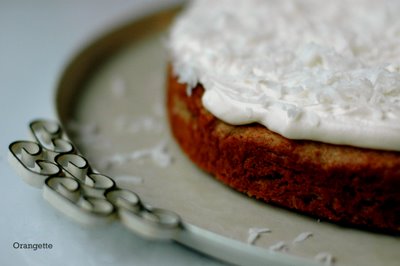
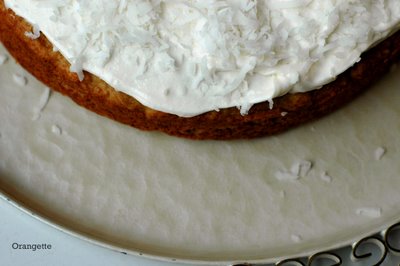
I can think of many worse ways to solve a problem than with a plate of this cake: sweet, tender, freckled with nubs of cornmeal and shards of lemon zest, and fitted with a lacy, delicately crunchy collar. When something is this good—really, knee-bucklingly so—any adornment is superfluous, but because I was on a mission, I gilded my lily with a sauce of warm jam, made silky and spoonable on the stovetop, and then I silenced the eleven-headed monster under a few soft peaks of whipped cream.
And before the cabinet calls again, I’m taking the last piece of cake and catching a plane to New York. I’ll be back in ten days—and ready, no doubt, to attend to the ten jars of jam still waiting.
Cornmeal Cake with Warm Apricot Jam and Whipped CreamAdapted from Fresh from the Farmers’ Market, by Janet Fletcher
I think of this cake as a sort of sexed-up cornbread. Put it this way: it is to cornbread as a silk nightgown is to cotton pajamas. It’s still comfortable in the way that only cornbread can be, but it’s better. To treat it right, be sure to use a good-quality jam. I used a sunny apricot version made by one of my favorite French producers, La Trinquelinette. I imagine that a vibrant strawberry might be nice too—or really, anything with a bright flavor and good balance of sweetness to acidity. If you want to gild the lily even further, you can play at slipping a little liqueur into the whipped cream—maybe 2 teaspoons to 1 tablespoon per cup of cream. Bourbon goes especially well with apricot, I’m happy to report.
1 ¼ cups cake flour
6 Tbs fine yellow cornmeal
2 tsp baking powder
¼ tsp salt
½ cup milk, preferably whole
1 tsp pure vanilla extract
½ cup (1 stick) unsalted butter, at room temperature
1 cup granulated sugar
2 large eggs
1 tsp grated lemon zest
½ cup good-quality jam, preferably apricot
1 cup heavy cream
1 Tbs powdered sugar
Preheat the oven to 350 degrees Fahrenheit. Grease the bottom and sides of a 9” round cake pan with butter or cooking spray, and then dust the pan lightly with flour, shaking out any excess.
In a bowl, whisk together the cake flour, cornmeal, baking powder, and salt. Set aside.
In a measuring cup, combine the milk and vanilla extract. Set aside.
In a medium mixing bowl, beat the butter until creamy. Add the sugar gradually, scraping down the bowl once or twice, until smooth and fully incorporated. Add the eggs one at a time, beating well after each addition. Add the lemon zest, and beat to incorporate. Add the flour mixture in three batches, alternating with the milk mixture, beating on low speed until just combined. Spread the batter evenly in the prepared pan.
Bake the cake for 35 to 40 minutes, or until a toothpick inserted in the center comes out clean. Allow the cake to cool for 15-20 minutes in the pan; then invert it onto a plate, and turn it topside up onto a rack. Cool the cake to room temperature.
When you are ready to serve the cake, spoon the jam into a small saucepan, and warm it over medium-low heat, stirring occasionally, until it loosens to the consistency of a spoonable sauce and bubbles gently around the edges. If your jam was on the thick side to start, or if you would like a truly drizzle-able sauce, you may want to add a bit of water—a couple of teaspoons, maybe, or more—to help it along.
While the jam warms, whip the cream. Pour the cream into a mixing bowl, and beat it on medium speed until it begins to thicken. With the beaters running, slowly sprinkle in the sugar, and continue to beat until the cream holds soft peaks.
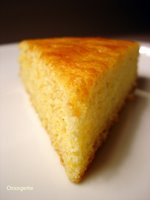 To serve, cut the cake into wedges, drizzle a bit of warm jam over the top, and dollop with whipped cream.
So much sugared, syrupy fruit should have me ecstatic, I know, and I’d be lying if I didn’t admit to a certain amount of excitement each time I open the cabinet door. There they are: nearly a dozen jewel-toned jars, shimmering with promise and ready to spread. I reach for one. I turn it over in my hand, admiring its heft and viscosity. I test the lid, making sure that the seal is secure. And then, with a sigh, I put it back on the shelf. I love jam—the concept of it, the process of making it, the mere fact of its existence, not to mention its flavor—but I never seem to actually eat it. Apparently, I collect it. I guess it’s more my style than stamps, or PEZ dispensers.
But nonetheless, it’s getting obscene, if not a bit ominous. Being the somewhat anti-waste woman that I am, I can’t help but hear a call—or, rather, a roar from the back of the cabinet—to do something with the stuff. To hoard so many calories really can’t be okay, especially when I could eat them instead. Toast would be a good start, but sadly, I prefer a glob of salty butter to any number of jams, jellies, and preserves. PB & J would be fine, too, but I like peanut butter plain much better. I could make a batch of Linzer cookies, I guess, but they say Christmas to me, not late March. And really, when dealing with this quantity of concentrated fruit, I think it best to cut straight to the chase, and just spoon a half-cup or so on top of a cake.
I’ve been a fan of cake-jam pairings for a little while now, since a recipe by Flo Braker taught me that jam belongs not only on bread, but also on a simple, buttery cake. Her method calls for a cake sandwich of sorts, with a slathering of jam in the middle and a doily of powdered sugar on top. It’s hard to argue with near-perfection, but this time, I wanted something even simpler. And turning from the pantry to my pile of cookbooks, I found just the thing: a cornmeal cake, already book-marked and waiting, no doubt, for a warm, jammy sauce and a crooked cap of whipped cream.

I can think of many worse ways to solve a problem than with a plate of this cake: sweet, tender, freckled with nubs of cornmeal and shards of lemon zest, and fitted with a lacy, delicately crunchy collar. When something is this good—really, knee-bucklingly so—any adornment is superfluous, but because I was on a mission, I gilded my lily with a sauce of warm jam, made silky and spoonable on the stovetop, and then I silenced the eleven-headed monster under a few soft peaks of whipped cream.
And before the cabinet calls again, I’m taking the last piece of cake and catching a plane to New York. I’ll be back in ten days—and ready, no doubt, to attend to the ten jars of jam still waiting.
Cornmeal Cake with Warm Apricot Jam and Whipped CreamAdapted from Fresh from the Farmers’ Market, by Janet Fletcher
I think of this cake as a sort of sexed-up cornbread. Put it this way: it is to cornbread as a silk nightgown is to cotton pajamas. It’s still comfortable in the way that only cornbread can be, but it’s better. To treat it right, be sure to use a good-quality jam. I used a sunny apricot version made by one of my favorite French producers, La Trinquelinette. I imagine that a vibrant strawberry might be nice too—or really, anything with a bright flavor and good balance of sweetness to acidity. If you want to gild the lily even further, you can play at slipping a little liqueur into the whipped cream—maybe 2 teaspoons to 1 tablespoon per cup of cream. Bourbon goes especially well with apricot, I’m happy to report.
1 ¼ cups cake flour
6 Tbs fine yellow cornmeal
2 tsp baking powder
¼ tsp salt
½ cup milk, preferably whole
1 tsp pure vanilla extract
½ cup (1 stick) unsalted butter, at room temperature
1 cup granulated sugar
2 large eggs
1 tsp grated lemon zest
½ cup good-quality jam, preferably apricot
1 cup heavy cream
1 Tbs powdered sugar
Preheat the oven to 350 degrees Fahrenheit. Grease the bottom and sides of a 9” round cake pan with butter or cooking spray, and then dust the pan lightly with flour, shaking out any excess.
In a bowl, whisk together the cake flour, cornmeal, baking powder, and salt. Set aside.
In a measuring cup, combine the milk and vanilla extract. Set aside.
In a medium mixing bowl, beat the butter until creamy. Add the sugar gradually, scraping down the bowl once or twice, until smooth and fully incorporated. Add the eggs one at a time, beating well after each addition. Add the lemon zest, and beat to incorporate. Add the flour mixture in three batches, alternating with the milk mixture, beating on low speed until just combined. Spread the batter evenly in the prepared pan.
Bake the cake for 35 to 40 minutes, or until a toothpick inserted in the center comes out clean. Allow the cake to cool for 15-20 minutes in the pan; then invert it onto a plate, and turn it topside up onto a rack. Cool the cake to room temperature.
When you are ready to serve the cake, spoon the jam into a small saucepan, and warm it over medium-low heat, stirring occasionally, until it loosens to the consistency of a spoonable sauce and bubbles gently around the edges. If your jam was on the thick side to start, or if you would like a truly drizzle-able sauce, you may want to add a bit of water—a couple of teaspoons, maybe, or more—to help it along.
While the jam warms, whip the cream. Pour the cream into a mixing bowl, and beat it on medium speed until it begins to thicken. With the beaters running, slowly sprinkle in the sugar, and continue to beat until the cream holds soft peaks.
 To serve, cut the cake into wedges, drizzle a bit of warm jam over the top, and dollop with whipped cream.


 When
the cupcakes are cool, make the frosting. In the bowl of a food
processor, combine the powdered sugar, cocoa, and malted milk powder,
and process to mix well. Add the butter, and process to blend. Stop the
motor, and scrape down the sides of the bowl with a rubber spatula.
Then, with the motor running, add the water. Process briefly, until the
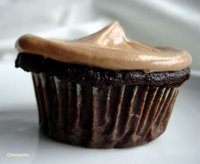
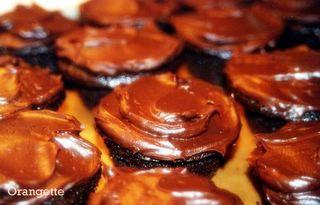
frosting is smooth. Frost the cupcakes in loose swirls, and serve.
When
the cupcakes are cool, make the frosting. In the bowl of a food
processor, combine the powdered sugar, cocoa, and malted milk powder,
and process to mix well. Add the butter, and process to blend. Stop the
motor, and scrape down the sides of the bowl with a rubber spatula.
Then, with the motor running, add the water. Process briefly, until the
frosting is smooth. Frost the cupcakes in loose swirls, and serve.



 Pour
1/3 of the batter into the prepared pan. Scatter about half of the
blueberries over the top. Add another 1/3 of the batter, and top with
the remaining blueberries. Top with the remaining batter. Bake the cake
for 25-30 minutes, until the cake rises, pulls away from the edges of
the pan, and springs back when pressed gently. Remove from the oven and
let cool for 15 minutes before unmolding onto a wire rack to finish
cooling completely.
Pour
1/3 of the batter into the prepared pan. Scatter about half of the
blueberries over the top. Add another 1/3 of the batter, and top with
the remaining blueberries. Top with the remaining batter. Bake the cake
for 25-30 minutes, until the cake rises, pulls away from the edges of
the pan, and springs back when pressed gently. Remove from the oven and
let cool for 15 minutes before unmolding onto a wire rack to finish
cooling completely.


 After a bit of scampering on the chilly beach, Mike did an excellent impersonation of a man being shot out of a (tree-)canon,
and then, climbing over snow-covered logs and splashing across a stream
on wobbly rocks, we found a small grove where we unfolded a picnic of cheese, apples, and man-sized slices of honey gold oatmeal bread
(courtesy of Kate). Then, with frozen fingers and full stomachs, we
returned to the car and to Sultan, to begin the slow preparations for
dinner—but not without a requisite near-nap in the hammock for me and
Kate, a wood-chopping workout for Mike, and a bit of chainsaw action for
Nicho.
After a bit of scampering on the chilly beach, Mike did an excellent impersonation of a man being shot out of a (tree-)canon,
and then, climbing over snow-covered logs and splashing across a stream
on wobbly rocks, we found a small grove where we unfolded a picnic of cheese, apples, and man-sized slices of honey gold oatmeal bread
(courtesy of Kate). Then, with frozen fingers and full stomachs, we
returned to the car and to Sultan, to begin the slow preparations for
dinner—but not without a requisite near-nap in the hammock for me and
Kate, a wood-chopping workout for Mike, and a bit of chainsaw action for
Nicho.


